
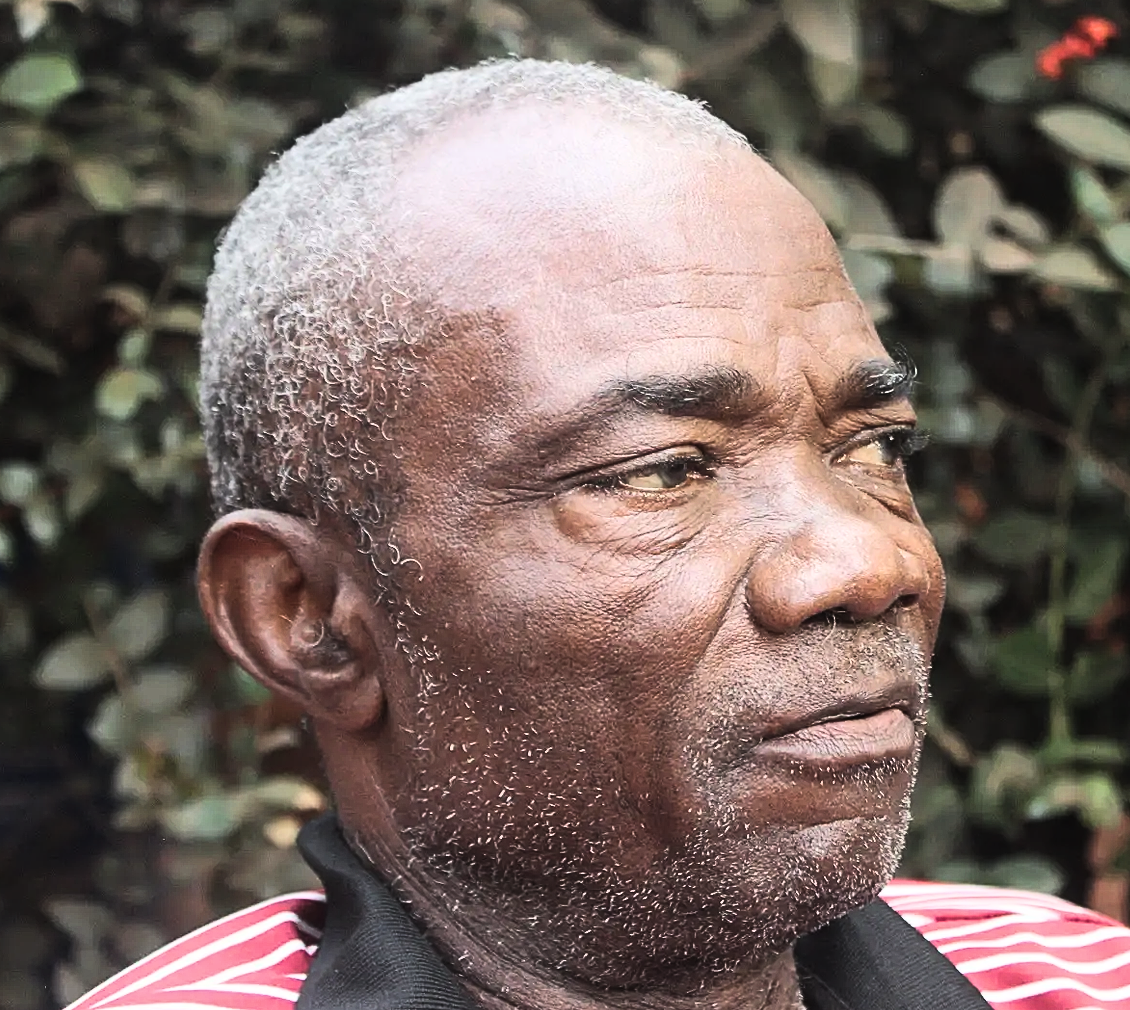
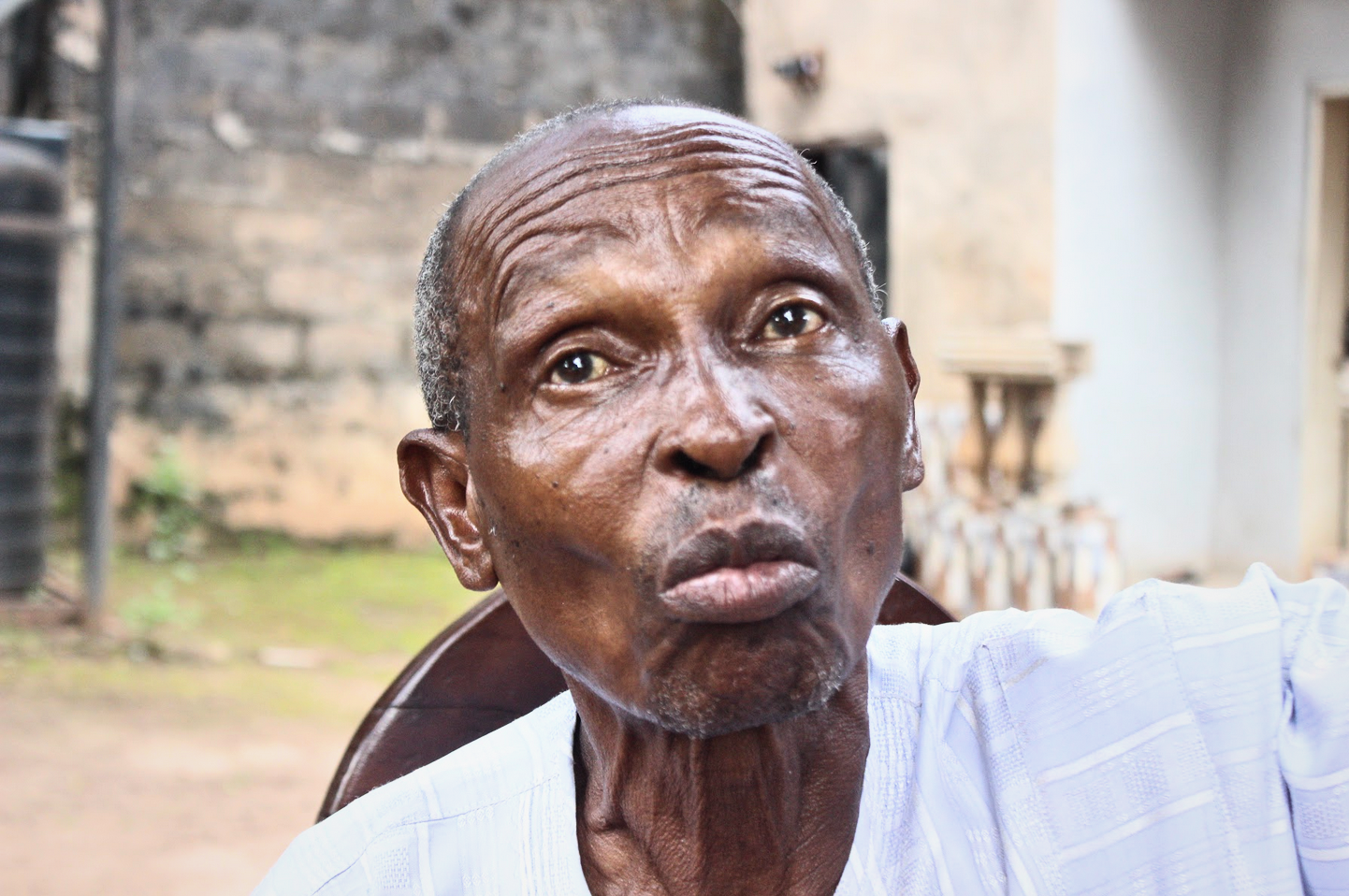
My name is Innocent Okoye, Ogugwuani Abgaja Abatete. When the war started, I was in our community Abatete [in present-day Anambra State]. I was twelve years when the war started. I was born in 1955. So, we were watching TV in the house of a man from our village called Chukwurah and they were saying that they killed Aguiyi Ironsi and we were watching his burial and other things.
“…there are people from our community that was brought back [from the North] dead.”

There were a lot of killings in the North and there are people from our community that was brought back dead. There is nothing we could do; we were just watching. It just that Ojukwu came. Ojukwu was the then-governor of Eastern region. He was leaving in Government House Enugu as the Governor of Eastern region.
The killings continues and he call Igbo elders and asked them this thing that is happening what do they think? Many people told him if he can, he should bring in guns so they can mobilize youths to address the situation. He told them no that they should go for peace, that was when they went for Aburi Accord in Ghana. They started the conversation and continued, we understood from what they said that they agreed that every region will be independent in a weak federal system. Everyone will be paying tax to the federal, but you will be independent. They agreed and came back, they started waiting for Gowon to make the announcement because he was the head of state then and Ojukwu was the governor of Eastern region. They waited for Gowon to make the announcement what they agreed in Aburi he didn’t announce so Ojukwu called him to know what he hasn’t made the announcement. He [Gowon] told him that he does not agree to the accord agreement. By then, Ojukwu checked and the killing of Igbo people continued in the North. Ojukwu concluded that the killings of the Igbos in the North is too much. By then, Gowon has noticed that Ojukwu was doing meeting with the Igbo people; he then declared war.
Our people started managing ourselves. Our people in the Nigeria Military mobilized and started giving people emergency training. They were training and sending people to war front. Where the war started was in Nsukka boundary in Igboland. Igbos in the Nigerian Army are the people that started saving people by then he said people that have gun to bring it and people that have double barrel brought theirs and they were managing before Ojukwu imported guns. He gave his Nnewi brother money to buy gun abroad, but the man went and never returned with the guns, he stayed there. If the Biafran soldiers kill the Nigeria soldier, they take the Nigeria guns and ammunition. If they displace the Nigeria army from there camps, they gather their leftover guns. That is it, that they have more gun to fight the war.

My personal story is that I was in my village with my mother and family then. We were managing ourselves and feeding, going to farm. There was no means many things were coming. That is why at some point the white people started bring things to us like corn milk, egg yolk and other thing and we were sharing it stockfish, salt. There is stockfish that has salt; that they brought. Then, including beef; that is all we were managing.
“…we ran into the bushes with the villagers.”
At some point I followed my mother’s sibling to Afikpo [in present-day Ebonyi State]. We were in Afikpo when it fell, we ran to Okigwe [in present-day Imo State]. We lived in Okigwe till it also fell; we came down to Orlu [in present-day Imo State]. We were in Orlu till the war ended. The day the war ended, the Hausa people entered Orlu; we ran into the bushes with the villagers. We were like the refugees, then with the villagers we ran into the bushes. We were in the bush the villagers gathered men and told them if we continue staying here in the bush that the Hausas will enter the bush and kill us all and it’s still the same death so is better for them to go and surrender to the Hausas to know if they will secure them. Them who are the grown-up asked us children and their family to stay behind.
“We thought they might kill us.”
By then I have reached thirteen years. They asked us to stay behind with the women and told us that if the Hausa start killing them, they will shout to our hearing and run towards us for us to know the situation. So, we stayed; we were there and they went to meet the Hausa people and stayed with them. Hausa people saw them and were happy…the pot of beans that they cook they asked them to go and serve themselves. They ate the beans with meat and they told them that they want to go and bring their family.

All of us left and went to meet the army where they were. As we are entering, they asked us to raise our hands, and we raised it and entered. After entering they showed us where to enter, and we entered they said everyone should go to the pot and take enough food everyone can finish. We went and packed food and eat. Everyone was happy and satisfied. We stayed with them, but once you are with them you will not go out. You are only allowed to move within the school environment because we were staying in school. They will give you food morning, afternoon and night and you will be having chat with them. They never harm us or disturb us. So, we stayed with them, after one week or more. At night, they throw searchlight. Ttatataattatataatat! And we became afraid for our life. We thought they might kill us. They where shouting, “haeu, haeu!”
Shooting the searchlight in the sky. They were rejoicing while we were afraid not until they ran in to tell us, “The war is ended! The war is ended! The war is ended! The war is ended!”.
… We started rejoicing. In the morning — because this happened at nigh — in the morning, they said everyone is free to go back to their community. We carried our things and trekked from Orlu to Abatete. When we came back our people were happy. That is how went through the war.
[During the war, I left Abatete to stay with my aunty, because] they came and saw that we were too many in our house. So our mother’s sister that is cooking fast food in Afikpo ask that live with her in order to easy the stress of caring for all of us from my mother because our father is late and I am the third child. We were all little back then.
Yes, the war has started [by then]… Our community didn’t run, people stayed here steady. Sometimes we do ask people who comes from our side if Abatete has ran, they says no that the [Biafran] Army are living in Abatete….Biafran Army, from here they go to war front in Ogidi.
[The day Afikpo fell to the Nigerian Army], I, personally with my relatives went to fetch water in the stream that we normally go to wash bitter leaf we use in fast food shop and came up after fetch water we were cooking when people came to inform us that the Hausa have reached the river, that Afikpo is on the run. We rushed into the house and gathered few belongings that each person can carry and left our home because people were asked to leave their houses, that Hausa has entered Afikpo. They are in the river. We went to the neighbouring town, Okposi, and rested, eat the food we brought and then move to Okigwe, where we settled for awhile and moved again.

[In Okigwe] there is a place for refugee. As you come out, the main road is full of people especially does who carry loads. Any school we see we enter, once you see people entering the place you join them. As we started staying there the army will come to give us instructions of what to be doing and how to stay safe there. The community will also come to give us guideline how to stay as refugee.
“When the plane comes to throw bomb, there are people it will kill and persons will tear into two.”
[In the refugee camp], the military control, things but male elders also control things generally as fathers. If anyone do something that is not good, they are the people to caution the person or flog the person small and advice the person not to do it again. If plane is coming to bomb, they direct us to the place there is bunker, enter. The bunker is like a parlor, big parlor. So, we enter inside. After the bombing we come out.
They also told us that if you are walking on the road and the plane that is throwing bomb comes that you shouldn’t move. Instead stand like a dry tree, it will identify you as a none living thing. If there are tree around and the plane is not close enough yet, you run to the tree and stand beside it. These are the things they taught us.
Eeeeh when in camp they don’t allow people to go far and they do give you what to be doing. We do see people…killed by plane. When the plane comes to throw bomb, there are people it will kill and persons will tear into two.

Yes [I witnessed this], where we were there was a time, it came and throw bomb but it was people walking along the road not inside where we were but it is after throwing of the bomb and when they left, people will start crying and shouting, we ran out to see the damage.
We normally go [to the camp] where they are sharing relief. There is a different place the community bring out where things will be shared but in that place the refugees stand different and the community members stands differently. So, when they come, they bring book because that place you are you already have nominal roll, list of how many you were. They hand them the paper over, so they call the list to handover things to us.
“…that is how many Biafran soldiers were saved.”
When they told us that the war has ended, everyone was happy and we packed our belongings. On our way, there are Biafran soldiers we saw on our way going home. If my mother sister sees them going home on uniform she calls them and give them her wrapper to change their uniform because the Nigeria army will kill them if they see them because there are many, they saw and asked them to remove their cloth. Grown up men can’t go remove his cloth to go home naked. They shoot them.
So, women started stopping and giving out their cloths to the Biafran soldiers who were going home. Even if it’s polo wear it on his waist. Men as well were also giving out their own cloths and that is how many Biafran soldiers were saved.
We all came back to Abatete together…her [my aunty’s] children and myself came to my house. We stayed for a while, and I told them that I will not be going back with them. You know someone that came back and saw his siblings and the period I was with her [my aunty] I never went to school, so I stay home and was able to start school again.
If they dig bunker, they will they brings rod of palm tree to place across it and find something to cover it and then cover it with sand so if plane comes to bomb we enter inside it…it has a different entrance. That is what covers the top. People will normally wouldn’t know there is a house underground. It has steps. Like this fence is now the whole of this fence can be dogged and…palm tree will be used to cover the top and the way this step is now, eeeeeh, will be the same from the inside to the top so you can easily run inside the bunker and come out through the step. It is like upstairs but underground. We normally use mat inside. It is as big as a parlor as it could contain a family….Where you will see it currently is in Onitsha Government house, the one Ojukwu used during the war.
[Onitsha fell to the Nigerian Army during the war,] but before it fell, they have the bunker there or else they have covered it because since how many years I haven’t gone to that place I don’t know if it’s still there but it was there before.
This interview was conducted in Abatete in Anambra State in September 2025 by Chukwuebuka Okoye for Biafran War Memories, a program of ZIKORA Media & Arts African Cultural Heritage Organization.



Leave a Reply