
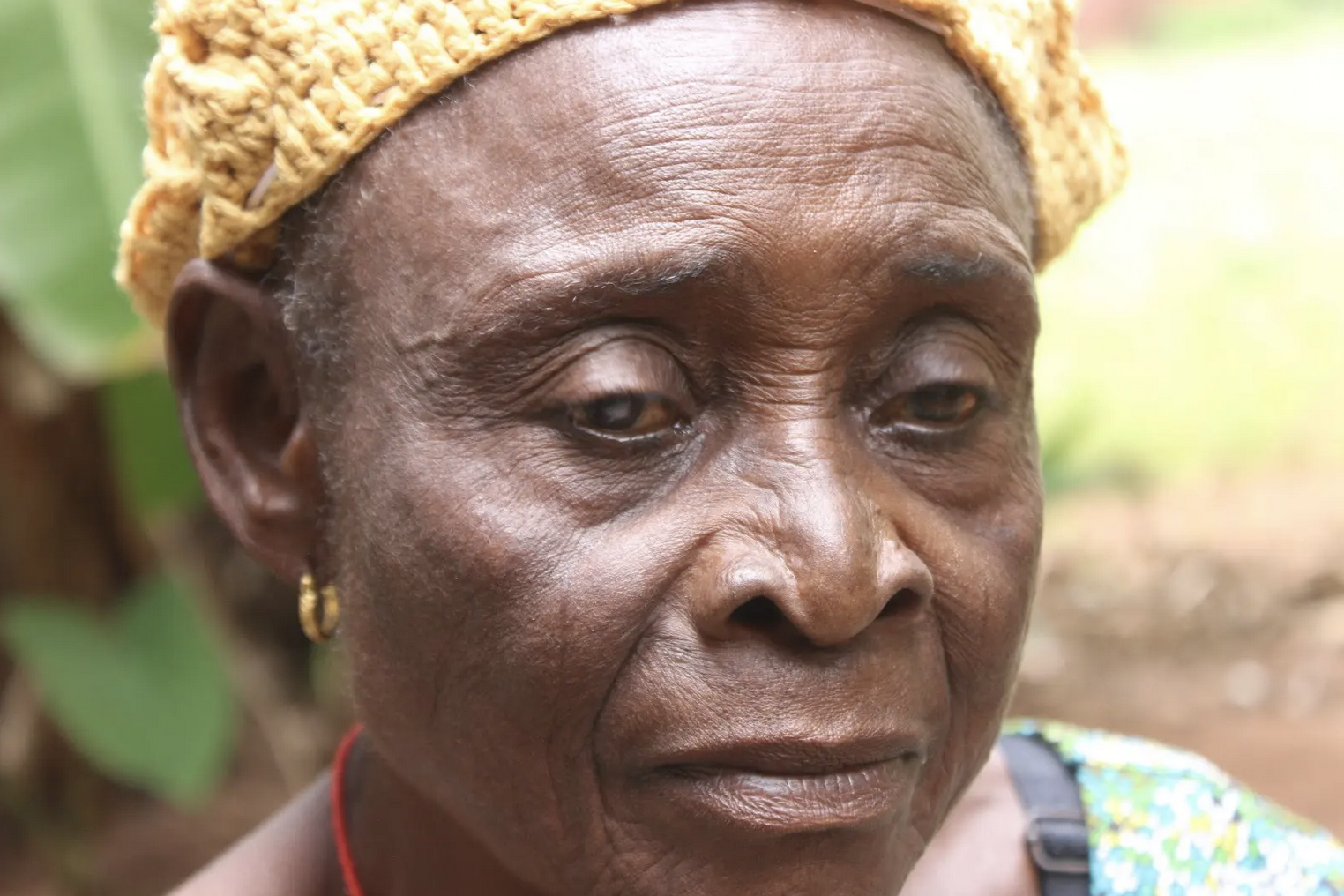
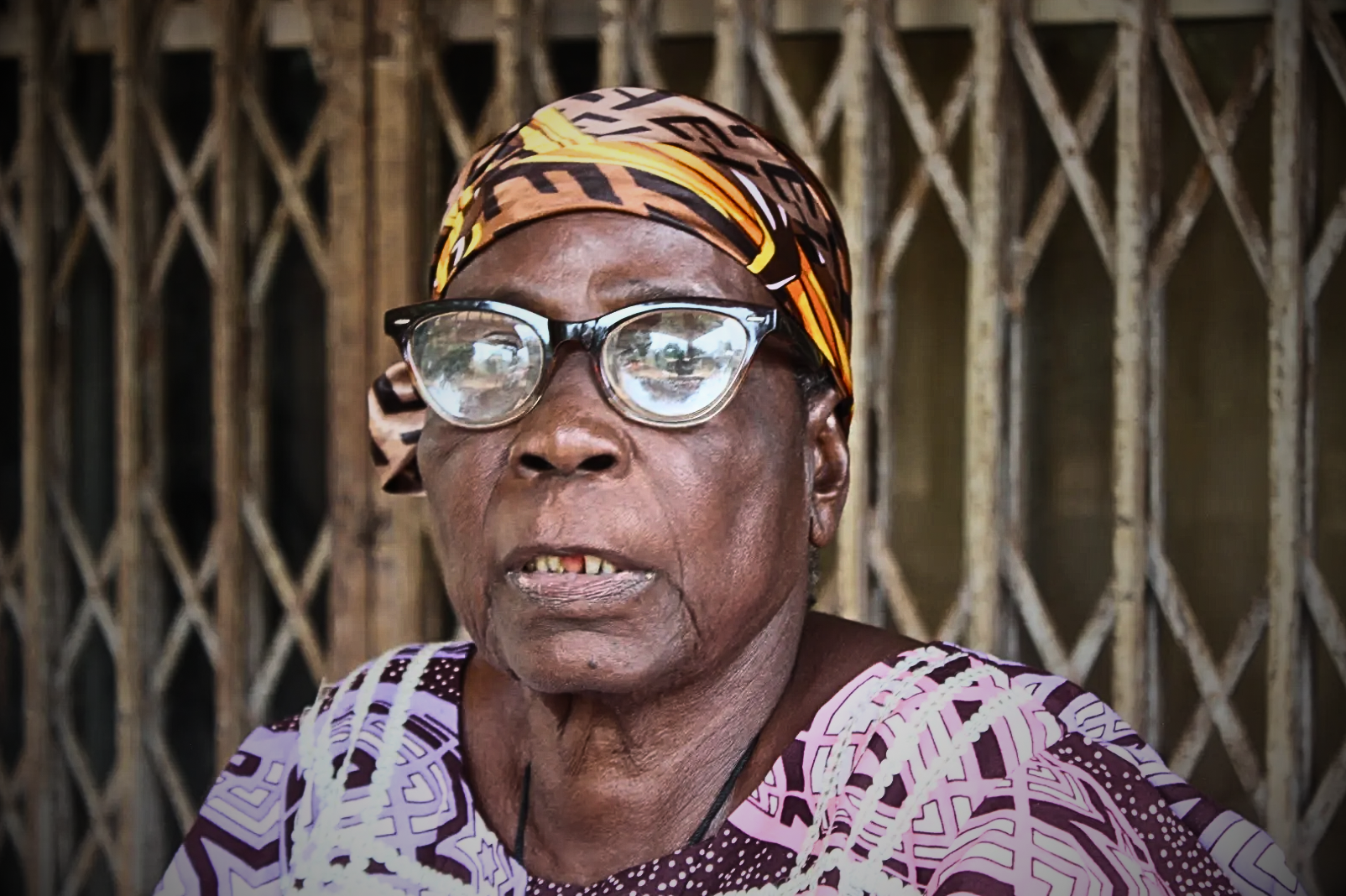
My name is Justina Ukejiamatu. So, I am 21 years then when the war started. So, my children and I were living in this compound. The war started, people living in the North came back. They were pursued from the North and all of them came back, people from Eziowelle, Ukpo, Abagana, all of them seek refuge in this compound during the war. So, when we are like this, planes will always come around. We built what we called bunker. It is like a well, but it can accommodate up to 15 persons inside. We covered the top. So, when people enter inside, they will be covered. So, when the plane comes, from Ogidi, you can hear the sound of the plane. We all gather and enter inside the bunker. We would sit down there. We would dive into the bunker. We would not move. Then, the plane would pass us and go down. Then, it will return. Then, we would notice that the plane has gone. We would come out. At some point, we decided we will be going to market to buy what to be eating.
“We would not move.”
So, when the plane returns, we would come out from the bunker and we would sit. If anybody has something to eat, the person would prepare it and eat.
At some point, we decide that we would be going out, the plane attacks reduced, we started going to the market, Afor Ufuma, when you get there you can buy cassava, fish and garri. I buy garri in bags, their palm kernel is special, so when you buy two foreign rice bags of it and come back with it, that is what you give people at home. You share it among them in a small basin together with garri..

So, when the plane comes, we enter the bunker. We would crack the palm kernel and eat it with garri. After which, we would drink water. Then, at night, we would not hear the sound of the plane. We would come out to cook. If you boil hot water, you bake the garri. We also buy yam from Afor Ufuma market, you cook the yam, if it is fufu that you will prepare with your family, you prepare it and keep in the house When it’s time for the arrival of the plane, we would all enter inside the bunker. That is where we stay it’s only at night that you wouldn’t hear the sound of the plan. Tomorrow morning, we would come out and start looking around. We don’t go far, but sometimes they go far like Izuogu market [in present day Imo state]. But for someone like me, I didn’t go to that market. Once that I went there we encountered soldiers who stopped us and brought down our goods and they searched our goods and took some. You also will use good heart to give them some of the things that you bought, they will leave you to cross. Another day, when we prepare, we go back.
So, this our Eke market doesn’t open because the environment is open. What we did was that there is a small bush down the road with tall trees. People went and cleared it. That is where our market was moved to. Early in the morning, on the market day, we would go there. Even people from other communities come around. whatever you have , you sell there in a hurry, before 10am all of us have gone back because around 11am the plane comes back. Some persons think that the war has almost come to an end, they went to where the market use to be, the plane killed them. Like there were people that were short listed for Army, some of them died. They didn’t come back. That bullet killed them. After awhile, My brother-in-law in this house, one man that constructed frame and doors he will use in his house was short listed for army because they shortlist people into the army then.
“…the plane killed them.”
There is how a family will be populated, there are some that their only son was shortlisted too, his Father or Mother might protest but the people will insist that he must go to war. In that case the family can pay someone else to go to war in-place of their son. So, the man brought his frame, doors and windows for us to buy because there’s nothing in this house.
“In that case the family can pay someone else to go to war in-place of their son.”
He’s a carpenter. He said he was shortlisted, he doesn’t have any money with him and he doesn’t know if he will survive and come back. He want to keep the money so he can be buying food with it when he gets there, if he is lucky to survive he will construct another one when he comes back. He later came back alive, he wasn’t killed. So, now, we are around 60, 69. The war was coming to an end. We were outside when the war ended. I was still breast feeding my child, John. He was just six months when he walked. So, we went to Ufuma market. On our way back, soldiers were removing their clothes and throwing away. They were removing the clothes they used for the war.

When they see you carrying a child, a male child. They will give you corn milk and corn uh…dry egg that they were going back with….. Stock fish, they will ask you to give it to their fellow soldier. They were very happy. We were singing and dancing. We were happy as they depart. When we came back home, we just discovered that the war has ended. The garri that we came back with… there is a place in our place in Eke Uke, where they keep kwashiorkor patient, You know, kwashiorkor was rampant then. Kwashiorkor is hunger. What I would say they call it now is. uh uh….what did they call it?…. Eeh, the disease that sucks blood. Our people then call it Dike-ukwu. When you don’t feed well, it will come. People camped in our place, at Okaome people camped there. So after contributing garri we take it there. In our household, my mother-in-law, myself, husband, and our brother-in-law will always contribute and take to the there. They will write our name. They will give it to the kwachoko people. So when the breadfruit that is in Okaome falls, they rush and carry it before you know it, they have prepared it finished either they fly it or cook it…uh……..because of it, when I went to Uturu to farm after the war, they gave me gifts due to Abagana and Ukpo Indigene ran to seek refuge in our community during the war. They were very happy because of things that they eat in our community and the protection we gave them that kept many of them save.

So during the farming season, they said that they will farm alongside with me for us to all farm together because we saved them. My community saved them. That is how the war ended and we were all happy. And that is how it ended. That is where I can remember.
That is where I remember.
This interviewed was conducted in Uke, Anambra State by Chukwuebuka Okoye in August 2025 for Biafran War Memories, a program of ZIKORA Media & Arts African Cultural Heritage Organization.





Leave a Reply