
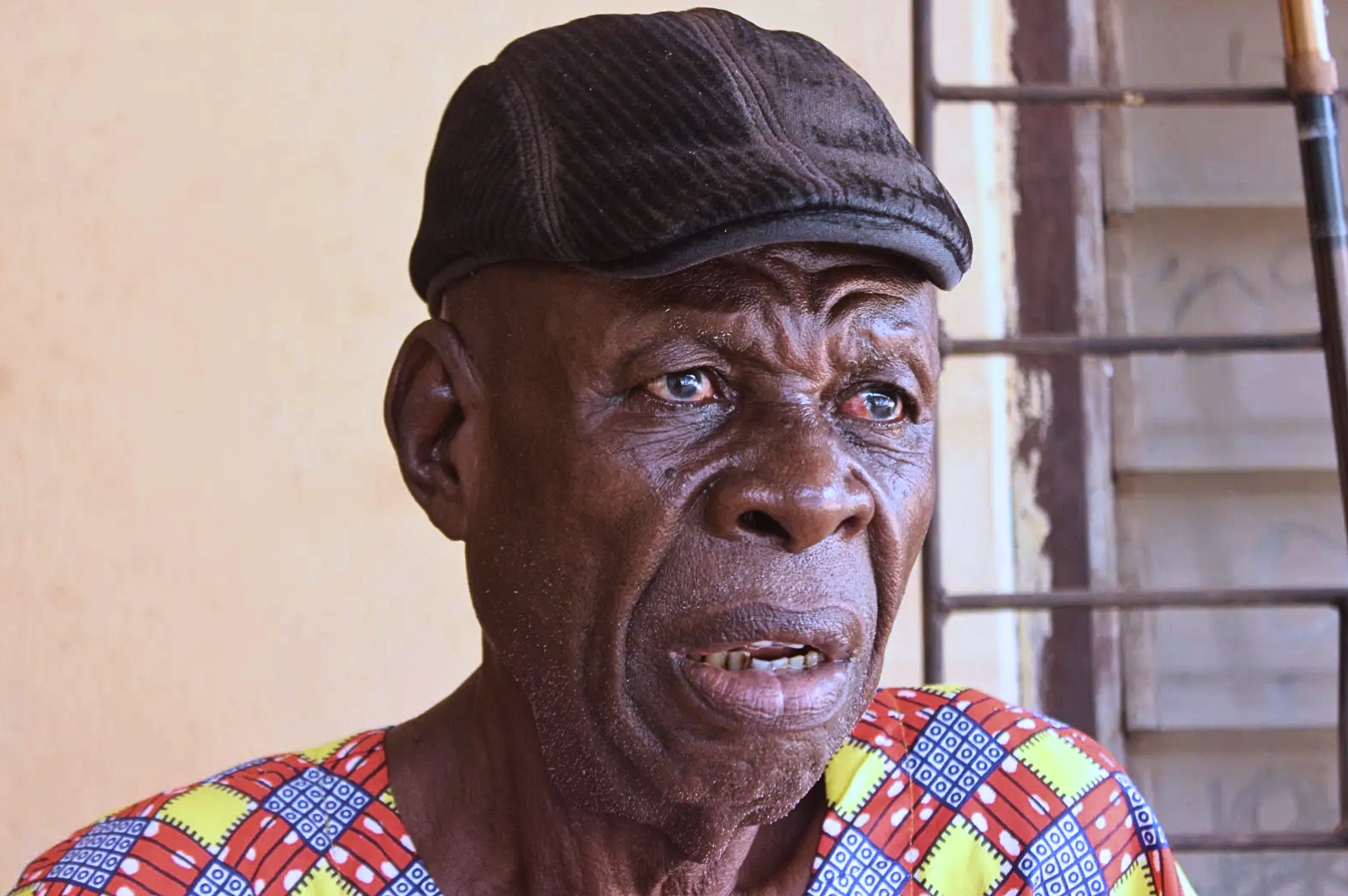
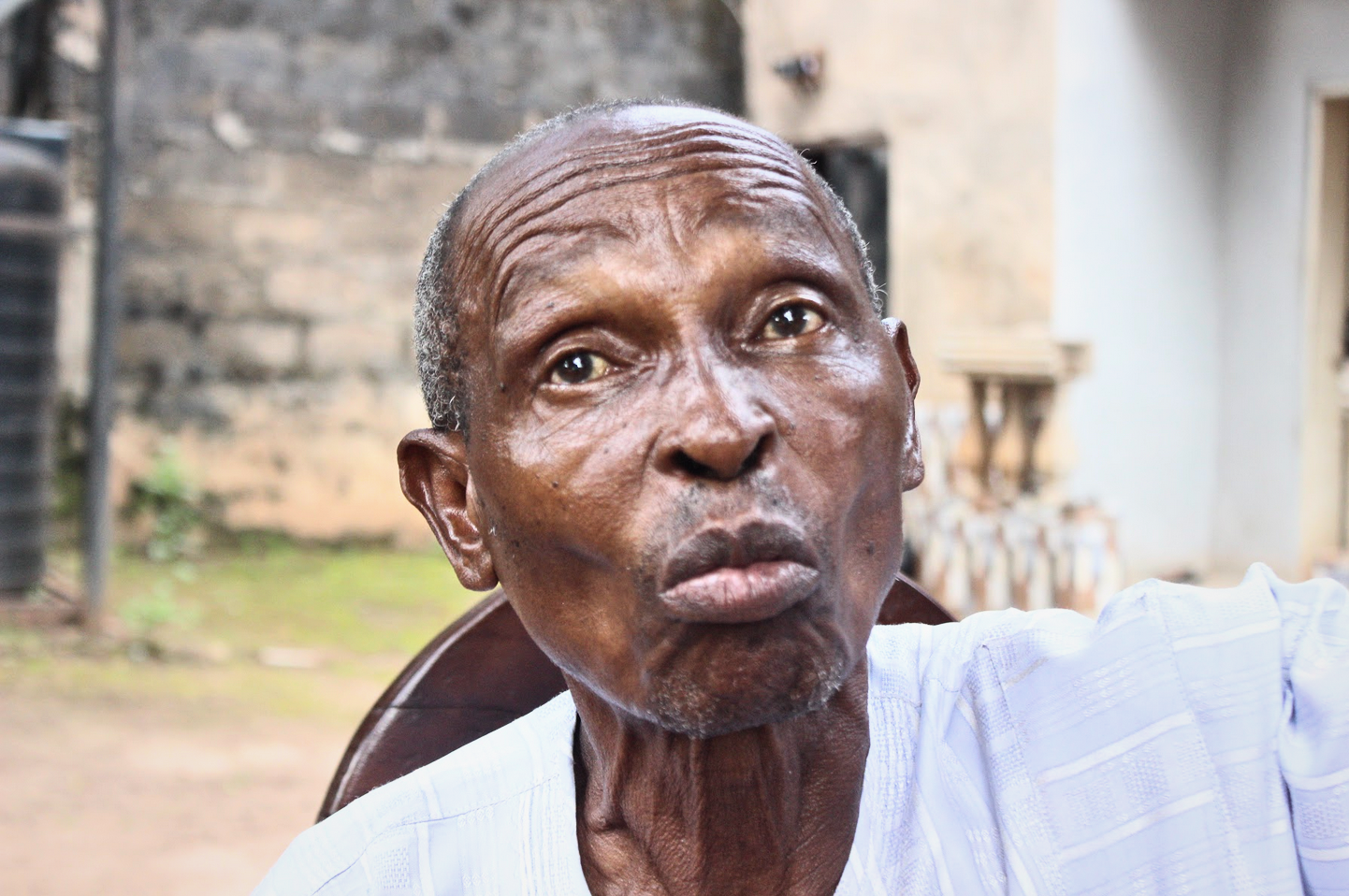
I am Sunday Mgbachi. I was in Oraukwu [in present-day Anambra State] when the war started. Then, people ran to Oraukwu as refugees both to St. Joseph and St. Thomas; refugees were living there, that is people that ran from their own community. Then, we were five brothers; three entered army and my brother who was a captain in the Biafran Army is still alive now.

I move from here to go meet him at 60 battalion Nibo [in present-day Anambra State]. He is the one parading there. When I get there, I stay two weeks, one week me and his wife. There are places we will reach the war will become very serious. They will shoot for long and in most cases, we will turn back and continue the next day and as we are going, I do wear rag cloth. If you dress well and reach checking point the army that is there will count you into the army but if you dress like a mad person, they will allow you go.
“It is that lack of salt that causes kwashiorkor that was mostly affecting children because they don’t cook with salt.”
Some other days, there are signals they do give them. He will line one hundreds soldiers and move to war front. His wife and I will stay in their camp. Out of that hundred, forty might die and few others will not come back to the camp, and women were going to Afia attack going to where the Hausa are, to bring salt because there is nothing like salt that period. If you come to where the refugees are camped you can see someone that is not big, but his cheek will be large because they don’t cook with salt anymore. Salt is the most [sought out] commodity. It is that lack of salt that causes kwashiorkor that was mostly affecting children because they don’t cook with salt.

Sometimes, the aeroplane comes and monitors the environment and before you know, it drop bomb and it will kill some people. This story-buildings that you are now seeing now was not in existence then; it is this kind of old old houses you will see but the roof will be covered with palm fruit leaf so the aeroplane will not see the white. All this market that is now active in Nkwo and Oye, was [carried] under the tree. That is it.

There were times you will be going something like going to Abatete from here on reaching grammar school, they say that they are counting people into the army. If they see you they will just carry you without training. They take you with their motor and move to the war front. There is no training but someone that went to training before going to the battlefield there is always a difference because there are situations you might have to lie on the ground, crawl the way python use to from here to a place like Oye market. Bullet will be flying on top of you. Then, if you come where the refugees are you hear that Gabon brought rice or corn milk. They normally bring corn milk you must have heard about corn milk which they share to people that ran from their community. They share corn milk that used to draw and that is only opportunity to eat a better food. That is why they say that Gabon recognizes Biafra and was bringing food. It is the corn milk that they brought and was sharing, including people that are in their homes. If you prepare the corn milk, it is just like the way C-rain used to share rice, you will be very happy because there was no food.
Some persons move from here to Nkwelle Inyi [in present-day Enugu State], have you heard of Nkwelle-Inyi before?
Nkwelle-Inyi is alone the Oji [in present-day Enugu State]. People go there to get foods because Nkwelle-Inyi didn’t run from their community and they have too many food there in Ugwuoba. To go there, you will have to follow a motor 911 lorry.
“…you will hear that they are conscripting people in the four-road junction and you leave you hoe and everything and left to hide.”
…My brother was not conscripted, he joined voluntary….I often see him occasionally and there was no phone back then. His wife and I often move by one am at night so we could pass and left for his camp where he is 60 battalion Nibo. Even if he went to war front, they will tell us and we wait for him in some cases we stayed two days before they come back.
The food we eat then is that we often buy from the market and I also get a share in kwashiorkor patient food, too. That’s the food Gabon brings at St. Joseph. They do give me.
…My mum was around, whatever we see we eat. Someday, she often get something in the farm close by, but you that is a man might be cultivating in the farm and you will hear that they are conscripting people in the four-road junction and you leave you hoe and everything and left to hide.

Yes, [during the war, men didn’t have free movement. They] must be dodging.
So, the day my brother’s wife will feel like going to see her husband, she tells me and we plan it. If it rains, that if rain beat you on the way is better….
When the war was about to end, last operation they went. The signal came to the war front that the war has ended most of them left their guns in the war front and started going back to their community. Everyone was leaving.
…nobody had time for friendship. What is friendship? The only people that might have friends then were women and the friendship is transactional. So, she can be getting things like salt. And there is this fish, salt fish. If you put little of it in your food, it serves as salt. It is like this in size [small] like ice block. If you add a small part of it to the food, it’s enough.
“If they say war should come again, for someone that saw the first war, a second one will feel no different.”
There is no particular reason that I know that is why Oraukwu didn’t run. But Orakuwu was secured through Nimo to Eziowelle and there is a strong battalion in Nkpor junction so that is why the war didn’t move towards this side.
…they were saying that Nwaocha Oraukwu really participated in the war. In fact, there was a time they said that they will go to the deity for thanksgiving before. They made promises to her that if Oraukwu didn’t run though out the war that they will come to thank her but I don’t know if that thanksgiving happened.
If they say war should come again, for someone that saw the first war, a second one will feel no different. What others are doing you join.
This interview was conducted in Oraukwu in Anambra State in September 2026 by Chukwuebuka Okoye for Biafran War Memories, a program of ZIKORA Media & Arts African Cultural Heritage Organization.



Leave a Reply