
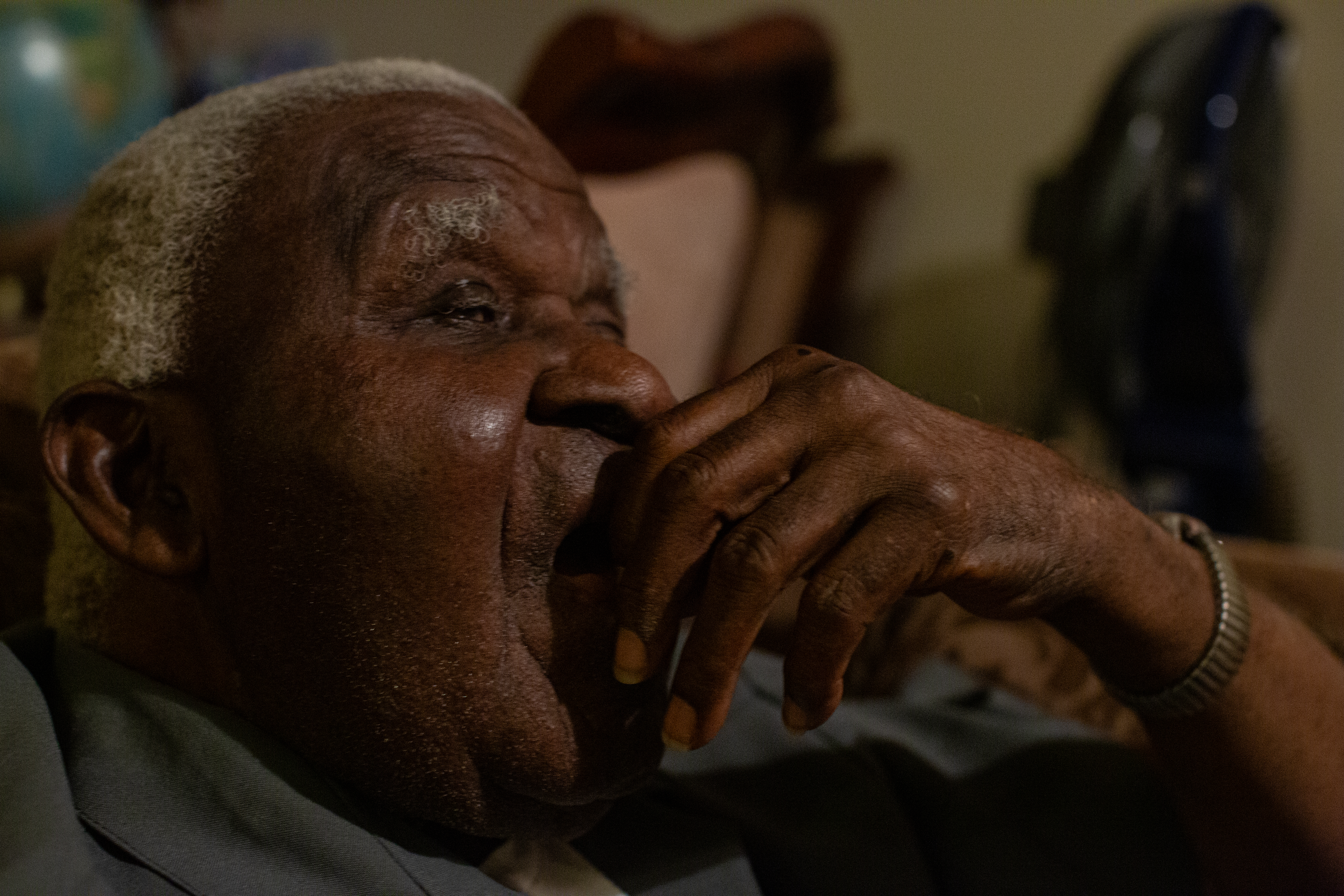
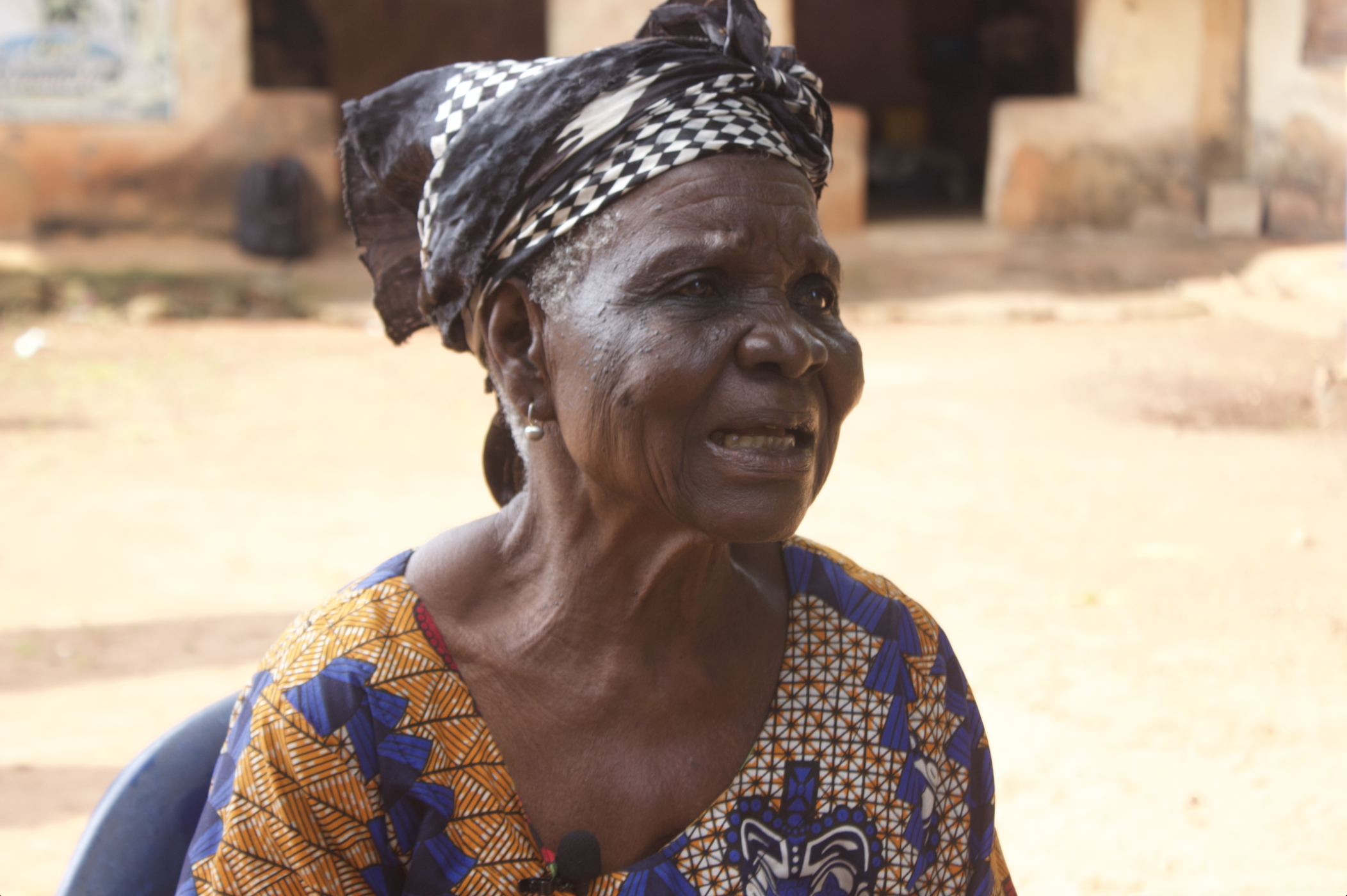
Well, my name is Chieka Ifemesia. I was born at Ogidi, a town in Idemili Local Government Area, Idemili, near Onitsha on October the first, 1925.
[In 1966] I was at Ibadan, but that is, my station was Ibadan. But part of the time in 1966, I was at Lagos serving as a commissioner on the Nigerian railway inquiry set up by the then Head of State- briefly Head of State, General Aguiyi-Ironsi. That is at the beginning, I was in Ibadan, but later in the year I went to Lagos to sit on this commission. It might be around the month of May or June [that I went to Lagos]. I was a senior lecturer at the University of Ibadan, [teaching] history.
It was later on when people heard more about the coup and began to develop conspiracy theories
First of all, radio before the newspaper arrives I mean, you hear things on the news and of course, people also come to talk to you about things. I’ve forgotten exactly what happened, where I was [when I first heard about the coup]. Well, I think, I think I heard the news before I went to school. Yes, I think I heard the news before I went to school. I [had] turned on the radio. Well, with the small radio we have [sic] in the house which we move around I mean you can be doing anything at all and be listening to the radio. We lived at a compound on the campus so I mean, I drove from my house where I was living to the classroom. It was a [gray] Peugeot [I was driving]. Peugeot is one of these French cars. That’s the normal car I was driving at the time. As far as the compound was concerned, I mean, nothing happened there specifically. So, I mean, not much was different from what things used to be.
[From the coup to the counter-coup a few months later, I remained in Ibadan]. At the beginning, people were, people were just thinking about the country and its problems and wondering how they would be resolved amicably hopefully.
Ah, it wasn’t immediately [that people were calling it an Igbo coup]. It was later on when people heard more about the coup and began to develop conspiracy theories [about it being an “Igbo coup”] and all the rest of it. I hadn’t a family then. I was alone.
And when things began to look, well, dangerous and extremely uncertain and uneasy for Igbo people, we quietly moved away.
No immediate family of mine was involved [killed in the 1966 pogroms]. My uncle and wife and other people I knew had come home before then. It was [my uncle and wife were] at Bukuru. They were at Bukuru. Bukuru is near Jos. About nine, ten miles from Jos on the Plateau. It’s Plateau State, it’s called now. It was province then.
By [the time Biafra was declared in May of 1967] I had moved to Eastern Nigeria. I had moved East to- well, I was at University of Nigeria. My station was Ibadan, but as I said I went to Lagos for, I mean, in enquiry, I mean to sit as commissioner on inquiry. And when things began to look, well, dangerous and extremely uncertain and uneasy for Igbo people, we quietly moved away.
we didn’t want any evil to befall us
I drove from Ibadan to Ogidi. It was in the month of em….September, I should think. ’66. I travelled with a distant cousin and friend who died early in the year [2018] – no, last year. Last year. Last November. He died in November last year. Ifekandu. Vincent Chike Ifekandu. He himself was working in Ibadan. He was in Ibadan. As I said we left from Ibadan. I think it was Nigerian railway. Yes, might be Nigerian railway. I think he was still in Nigerian railway at the time, but living at Ibadan. For life, for their lives’ sake, I mean, we didn’t want any evil to befall us at that point in time. We wanted to make our way. There had been one or two gross events in northern Nigeria and we were hearing the news that the next one will be even more disastrous and that anybody outside — any Igbo man or woman outside Igboland should look after himself or herself.
[I didn’t see any Igbo person harmed] at Ibadan or Lagos. The news, well the rumor was unsafety. I mean lack of safety for any Igbo person that was not in Igboland and emmm, one thought that the best thing was to be on the safe side. Whatever the news was all about, the best thing was to be on the safe side at that point in time, except for the fact that rather strangely which encouraged me to think that the best thing was to make my way out of the place. The day I returned from, yes, the night, the evening I returned from Lagos to packup and make a way with a suitcase or something because I couldn’t pack much luggage in an ordinary car.
So as they were moving around they came upon the papers of the inquiry I was sitting upon and said “Do you mean you are a member of this inquiry?” I said “yes.” Well they didn’t say anything more but, we ended well. I sat them down and asked my househelp to serve them with cold beer. And we finished as friends.
They said they would shoot at anything at all whether it moves or does not move…
The news had spread about Igbo people and [how] they are plotting one thing or the other in the country and that was why they were sent to search me. But they were, they themselves as we conversed before they left and because as I said we finished as friends, they were surprised that even they were sent to search me. They themselves because they, they felt a sense of guilt about it because they didn’t see anything at. They didn’t see any reason why somebody like me should be suspected of the kind of thing they were sent to search for. But there it was anyway.
I thought that was, even if I did not understand or accept what was being rumored about things concerning Igbo people all over the country, that was my own personal warning to be on the safe side and stay where I would be safe.
Oh, that night. I did not sleep in my house that night. I left with the, with the friend I told you. I mean in the evening of that day. There were no disturbances [along the road]. Nothing at all, I mean to be frank there were no problems at all. We motored all night long. I mean, got to Ogidi early in the morning.
We knew we were taking a risk, of course going home at an awkward time so I didn’t expect to see so many people around [on the road].
I didn’t know what was going to result from it [the declaration of Biafra] eventually, but I thought that Igbo people should set up the political, military and other structures necessary to defend themselves and stay alive in Nigeria. And Biafra was an instrument to that effect. An instrument for self-defense and retaining our culture, our stability and even, basically surviving in the country. The way I saw things were moving. We needed something to assure us that we’ll defend ourselves.
They were demonstrations [in Igboland, particularly in Nsukka]. Of course young people would, you expect young people to, having listened and having heard so much about what was happening and seeing also what was, I mean, people returning especially from Northern Nigeria. Of course, some of them, using one name or the other. Some of them [Igbo people returning to the southeast from the North were] in terrible condition. That is, those who survived. Others, when we asked about others, they had been killed or something like that. I mean it was so distressing. So the demonstrations were for the very things I’ve just mentioned.
These things [the return of Igbos from the North to southeastern Nigeria] were being shown on television, much of it were being shown on television. And those who travelled out of the compound because you know Nsukka campus is away from the major highway and so on. Those who travelled out and who went home or met people here and there saw some of the things that eh, or the people that were being, that were coming home or were being brought home. They were helpless and so on. You know. So, no, not me [I didn’t see them with my eyes]. I was a teacher, you know. I wouldn’t do the kind of things that students would do. And classes were going on. It’s just that student, as you’d expect take things into their hands at times, you know. No, I didn’t see any of them myself. These were students demonstrating actually.
…we might as well take the plunge and see what we can do to save ourselves.
I don’t know exactly, now, when some of the committees I sat upon began to function. Those were the ones, you say pro-Biafra or anything of a kind. I mean I sat on some committees here and there. I don’t know when, whether they began to, I can’t remember exactly now when they began to function, but that was the kind of part I played. Committees. They’re called to, I mean, set up to handle some issues. They, it was necessary to brief the general public in and outside the country about the case for Biafra. The case of the Igbo people at that point in time. And some committees were set up to consider these things and prepare the papers. That’s the kind of committee I’m talking about. I sat on some of them, on the briefs committee for instance, we prepared briefs that is, on any issue that required some kind of organized thinking or investigation or anything of the kind. We wrote position papers on them and passed [them] on to the head of, the person who became the Head of State of Biafra, but was governor of Eastern Nigeria at the time. That’s General Odumegwu Ojukwu.
People felt that we might as well take the plunge and see what we can do to save ourselves. Everything was being done in self-defense. [I supported the sentiment to declare the session of Biafra.]
We wouldn’t stay [when] they [Nigerian soldiers] marched into the campus [University of Nigeria Nsukka]. When they [Nigerian soldiers] were within a certain range we all quietly moved away.
I don’t know when they attacked the town itself, because we moved out ahead of the assault on the town. I moved home to Ogidi. By then I had, I was married. Myself and my wife. On the eighteenth of March, 1967 [we got married].
We moved straight, we drove straight from Nsukka to Ogidi. [We left] in the day, in the afternoon. Because we were beginning to hear the, what was it called? Anyway, they were dropping….not bombs, but mortars. I think mortars, it’s called. They make a lot of noise and really disturb anybody who is in the neighborhood. The place was not actually bombed as such at the time we were leaving. But there was this noise of mortars and so on, falling in the neighborhood within hearing distance. So we knew that we had to move away to save ourselves.
I mean, it [the bombing] went on a good part of a day.
[We packed] what we could carry in the car. That was all. Suitcases and things. Whatever we could put in there. But our books and so on, and the rest of the things were all lost. What we could take along, I mean the boot of a car and the rear seats isn’t so much luggage space. It’s as much as these things can take.
There are lots of things that we didn’t even think of putting in there that we looked for later on and did not find. [We were able to pack into the car] some clothes, some, a few documents and what else? House hold things. What my wife could get hold of that she wanted to bring along. And that was all.
[The Nigerian soldiers], why should I wait to see them? If you see them you are dead.
There was no, nothing yet by way of obstruction [on the road] or anything of a kind. We drove home, but of course not long after that because of uncertainty about so many things the, what was it called now? Well, there were some kind of home guard, you know, began to set up checkpoints on the road. But by the time we went home from Nsukka, those checkpoints were not existing.
People were going to their various towns, I mean, depending on where one came from.
Many of us on the campus were moving. [There was a lot of activity on campus.]
Back home I had my uncle. He was the only – the elderly person there. Of course, my mother had died the year before. Of course, my father died when I was seven years of age. In fact, before I went to northern Nigeria. They were the only – and yes my elder brother also, yes, was – yes, my elder brother and his wife were at Ogidi then. Those were the people we returned to.
My being driven away from Nsukka alone is enough to tell me that there was something happening…
As long as it was safe to stay there [in Ogidi]. When, as time went on and the war was moving from Nsukka to, to Enugu and from there, wanted to move on to Onitsha. And of course, Ogidi you know, is near Onitsha. We moved away from Ogidi right into the heart of Igboland. Far from the major highways because we noticed that the troops, the Nigerian troops were moving on the highways. They were not entering any byways at all. It was the highways they were on. The highway from Nsukka to what is usually called the Nice Man Corner, that’s a junction, to Enugu.
[The Nigerian soldiers], why should I wait to see them? If you see them you are dead. They said they would shoot at anything at all whether it moves or does not move. So the question didn’t arise at all. The kind of, the hatred and the attitude were such that you dare not stay around at all within sight. You are finished; you are gone. [After leaving Ogidi we] first, went to my wife’s sister’s husband’s place. Nawfija. [It was] probably a one and a half [drive]. One and a half, I don’t know. One and a half to two hours.
Do I remember the month exactly [when we left Ogidi]? Emm, but it was within that year. It was later in 1967.
…the war was a combination of what had been happening since the beginning of, what you might call, the amalgamated Nigeria.
Who would I teach at Ogidi? As I said I [previously] was at University of Nigeria [Nsukka]. The students, everybody, who would stay? I mean nobody and the school and everything closed down. [In Ogidi] first of all, we had to live on whatever resources we had at the moment. Then later on, there were arrangements for our monthly salaries [from the University of Nigeria Nsukka] where we could collect them…monthly salaries. That’s in the first few months before it became impossible to continue. So people had to find themselves into having, in war organizations that were around and that made their presence known and indicated what they were doing and from there they were able to get something to keep body and soul together.
Two ideas of nation-building have been in conflict in Nigeria since amalgamation
[The role I played during the war] it’s in the committees and the body set up to do the thinking and analysis and collection of material for whatever was necessary for the government and the activities. They needed that kind of support…it depends on what was necessary for some of the external conferences that Ojukwu went, and his group went. They wanted some papers on particular issues and we prepared them.
It’s important that you understand it because you may have been hearing all sort of things…two ideas of nation-building have been in conflict since amalgamation.
No personal [relatives of mine joined the war]. There were, yes, the same what you might call large family, in the sense that we have the same great ancestor. Yes, people like that [I knew who joined the Biafran army]. There are some people like that, but not any person close to me because I had no younger brothers or…
[We were there for a few months.] I mean, we were far away from anything concerning the war, so we heard nothing about the war from there. I am talking about noises of battle and bombing and things of that kind, mortars and so on. We didn’t hear much about that there. It was quiet in the hinterland.
That was a safe place. We could not be safer [giggles]. [We stayed there] just for some time. We moved [again] twice or thrice before the end of the war.
…the feeling of uncertainty and insecurity was predominant throughout the war.
[I was moving different locations because] it was a call of duty. There was a time that, as I said these committees and so on, I was sitting on, depending on where they met, where the center was that we were asked to meet, so I had to leave my family where it was safe. From this place we moved to somewhere else – a friend’s house somewhere else that was safe – but I went onto Umuahia, Aba, and those places to stay, returning to see them [my family] on weekends, you know?
I left [my wife in the safer place] and then we had a daughter during the war. So, I left them wherever it was safe from Nawfija to Umuju. And then of course, eh, we stayed for some time in em, what was the other place?
There was no stable steady [refugee] camp, because people were moving all the time.
He [my elder brother] came to see me and I also went to see him. Yes, we were in touch, yes.
A good part of, a good part of the war period was [very difficult] because the — although we — we had these eh, mental activities that kept us going. I mean em, the atmosphere was sad and dreary, but it came to its rest probably towards the end when the whole situation became hopeless, you know?
People planted crops they did not reap.
There was scarcely anything that satisfied me during the war. It was a terrible, dreadful, kind of situation. I mean, they stopped by everything that is happening around you because as I mentioned, there was constant bombing and strafing and so on. You never fight. I mean, settle down and felt safe and secure, so the feeling of uncertainty and insecurity was predominant throughout the war.
There was no stable steady [refugee] camp, because people were moving all the time. Biafra was a pretty difficult, hard going affair, you know. There was no camp where people stayed for any time. People planted crops they did not reap. Before you did anything, you were driven from that place. I was a refugee myself, moving from place to place.
I thought it was an awful, dreadful kind of death to meet.
The aid was distributed at certain centers and people who lived in – You know, what happened was that we were [kind] and contrary to what people thought about the Igbo people.
We went to certain areas and collected food.
In my case, there was something allotted to the group I belonged to. That was what I took home to my family. [Inside the case there was] fish, even salt, you know. That is, common salt. I mean…sometimes rice. I have forgotten the things that I used to collect from the areas…depending on what was available.
The things brought to us, we didn’t know exactly which group or organization brought them all but…[we received the allocation] once a month. Depending on what was available.
They [the Nigerian army] killed a number of people including some of our lecturers who, like me, left Nsukka and disappeared in the hinterland.
[One memorable day] was the day that not very far from where we were at Aba, we heard that, em, a plane flew across a particular area and saw quite a number of people standing around there, and turned around and eh, stripped them, and those who were not able to move away were killed and one of our lecturers were among those who were killed. I thought it was an awful, dreadful kind of death to meet.
What is the name of this place now? Umuaka. Umuaka Orlu.
So, we understood that the war was over… and we were told that as we heard that, not long after that, we heard that he [Ojukwu] had already left, that the broadcast was meant to be put out after [after he left].

THIS INTERVIEW WAS CONDUCTED BY CHIKA ODUAH IN PROFESSOR IFEMESIA’S HOME IN NEW YORK.





Leave a Reply